
Move and Capture are different orders
A Move order tells an army to travel to a destination. Passing through a province, crossing its border or stopping inside it does not by itself transfer control. To take eligible foreign territory, select the province and issue an explicit Capture order.
That distinction matters when planning a route: a march can cross several provinces without changing their owners. Check the selected province name and the order shown in the army panel before confirming. The server validates the route and command against the campaign rules.
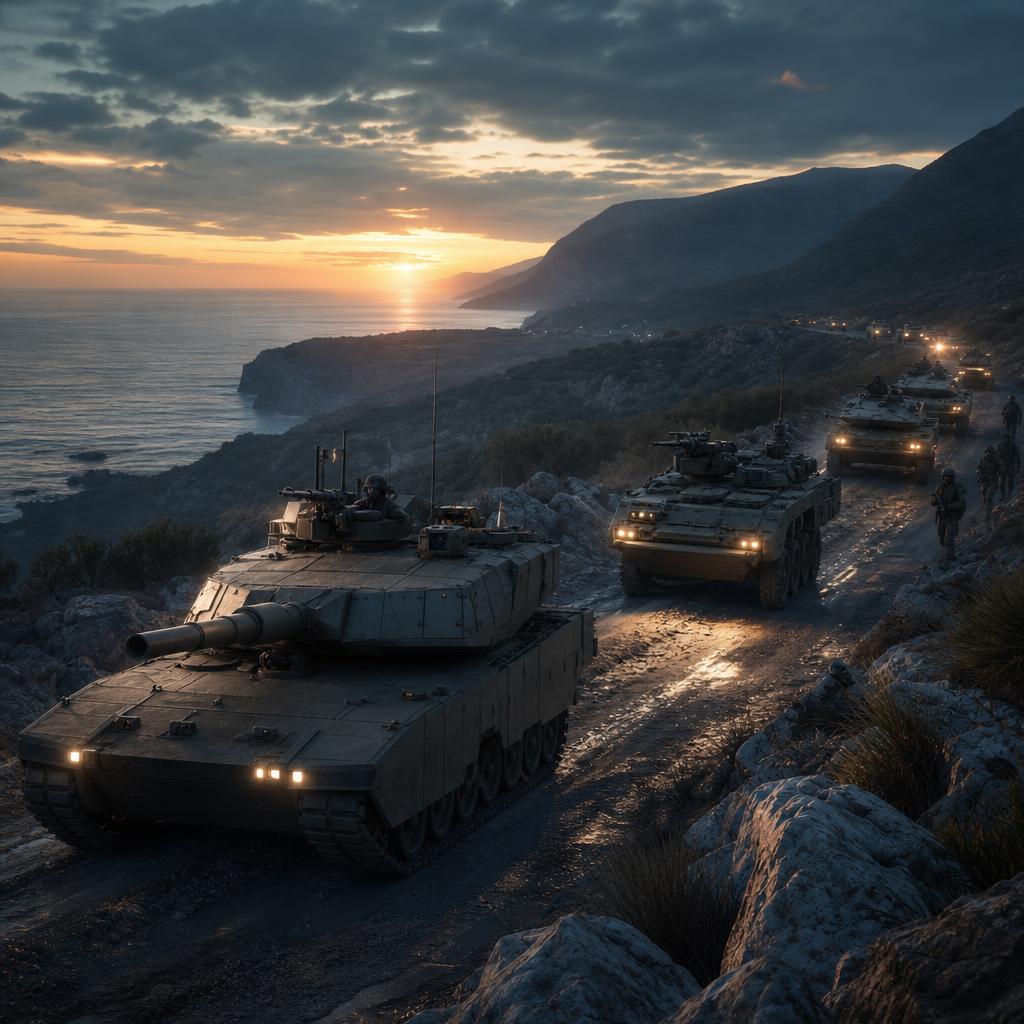
Illustrative artwork — not gameplay footage
Check the target before you commit
Read the current map and province details before issuing an order. Confirm which campaign server you are playing, the province you selected, and the forces you intend to send. A country's armies and resources belong to that server; they do not carry over to another campaign.
Use current information rather than an old combat report to judge a threat. Reports describe past events and do not provide live visibility into current ownership or defenders. For the broader rules on army contact and firing, read the combat range and targeting guide.
The capture order must reach the province centre
An eligible Capture order sends the force toward the province centre. A unit that is still travelling to the centre has not completed the action. Track the order and its live status; do not treat arrival at a border, road junction or nearby point as proof that control changed.
For aircraft, use the explicit Capture command rather than relying on flight over the area. Aircraft must reach and remain at the province centre for capture. Capturing aircraft stay there and rebase at that location, so plan their next base and fuel needs before ordering the mission.
Defenders can stop a capture
Defending forces at the target can block the capture. Reaching the centre is not a guarantee of success if a battle is still unresolved. Inspect the live army and province state, account for what your force can actually fight, and avoid sending units into a contested area on the assumption that a timer alone will take the province.
Ground and tank close weapons have a 50 km attack range; the defender's close-engagement range is distinct. Weapon range, current contact and the Capture command each solve a different part of the problem. Review the movement and combat guide before sending a force through hostile territory.
Aircraft need an explicit capture order too
Aircraft can capture when ordered to do so; simply flying over a province does not count. A successful aircraft capture leaves the aircraft at the province centre, where it rebases. That makes the destination a real operating location, not just a waypoint. Check that the aircraft has a suitable base and safe fuel plan for what comes next.
Air operations have their own fuel, base and patrol rules. See the aircraft and naval operations guide for the full mission checklist.
Original capitals are protected from transfer
A country's original capital cannot transfer to another owner. This does not make troops inside it invulnerable: stationed armies can still be attacked and destroyed. Plan around the difference between a protected province and a protected force—only the original capital's ownership is permanent.
What to verify after a capture
Once the game reports the capture complete, confirm the province's owner on the map and inspect its facilities and production. Province income uses real-hour timing; faster marches do not speed up resource production. Completed facility levels remain with a province when ownership changes, so an acquired area may have useful infrastructure already in place.
Use the right command
Move is for travel; Capture is for eligible forces taking territory.
Reach the centre
Wait for the actual capture condition instead of reading a border crossing as success.
Confirm the result
Check the live province owner and production after defenders are resolved.